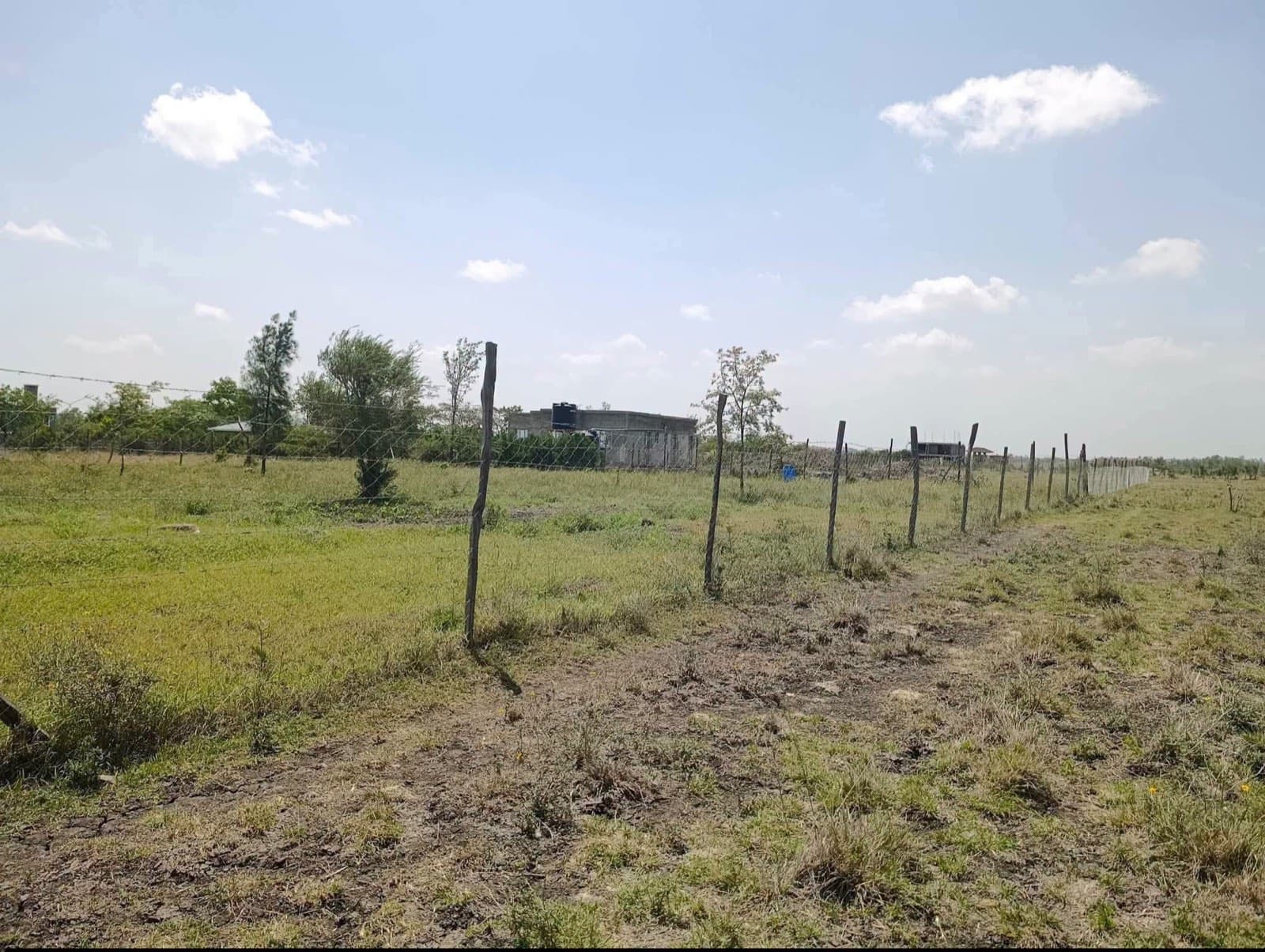
People who lose money on land in Kenya are rarely careless. Most of them did several checks. They did them in the wrong order: a deposit to "hold" the plot, then the search, then the discovery that the person they paid is not the registered owner, or that the land carries a bank charge, or that the beacons on the ground enclose a different parcel from the one on the title.
The single rule that prevents most of it: no money moves until the checks are done. Not a deposit, not a "commitment fee", not a payment for the seller's transport to the registry.
This guide sets out the checks in the order that protects the buyer. It is not a substitute for an advocate. Conveyancing is their job, and the sequence of a real purchase has steps this page deliberately leaves to them. What it gives you is enough to know whether the person advising you is doing those steps, and to recognise the warning signs early.
1. Get a copy of the title, and the parcel number
Before anything else, ask for a copy of the title deed and the parcel or land reference number. A seller who will not share it before a deposit is the first red flag.
The copy itself proves very little. Titles are forged, and a genuine title may no longer reflect the register. What the copy gives you is the number to search.
2. Do an official search
A land search at the registry, or through the government's online platform where the registry is on it, returns what the register currently says: who the registered proprietor is, the tenure, the size, and anything registered against the land.
Do it yourself or through your advocate. Never rely on a search result the seller hands you.
What to read on it:
- The proprietor. Does the name match the person selling, exactly?
- The encumbrances. A charge to a bank, a caution or a restriction all limit what the owner can do. A charged property can be sold, but only with the bank discharging its charge as part of the transaction.
- The tenure. Freehold or leasehold, and if leasehold, how many years remain.
A search tells you what is on the register. It does not tell you who is actually living on the land or what is happening on the ground.
3. Confirm the seller is who the register says
Match the seller's national ID, KRA PIN and, for a company, its registration documents, against the registered proprietor. If someone is selling on another person's behalf, ask for the power of attorney and have your advocate check it.
Be especially careful with land being sold by family members of a deceased owner. Unless the estate has been through succession and the land transferred, they may have no power to sell at all.
4. Walk the boundaries with a surveyor
The beacons on the ground should match the deed plan or registry map held for that parcel. A licensed surveyor can confirm it. This is the check people skip most often, and it is how buyers end up owning a title to one plot while fencing another.
While you are there:
- Talk to the neighbours. Ask who owns the land, whether anyone else has tried to buy it, and whether there has ever been a dispute.
- Check for occupation. Someone farming or living on the land may have rights that do not appear on the register.
- Check access. Is there a registered road to the plot, or only a path across someone else's land?
5. Check the outgoings are paid
Land rates and land rent usually have to be cleared, with clearance certificates issued, before a transfer can be registered. Unpaid arrears can be large on a plot that has been held for years, so find out early who will pay them.
6. Find out what consents the sale needs
Some dealings in land are not valid without consent from a specified body. Agricultural land commonly needs consent from the Land Control Board. Leasehold titles may need the lessor's consent. If the land is a unit in a development under sectional title, other rules apply. Your advocate should establish what applies before the agreement is signed, because some consents have to be obtained within a fixed time.
7. Check what you are allowed to build
Zoning and planning rules decide what can go on a plot. A plot sold as "ideal for flats" may be zoned for a single dwelling. Ask the county planning office, or have your advocate or architect do it, before you price the land on what you hope to build.
8. Sign a sale agreement, then pay through the advocates
Only now does money move. The sale agreement, drafted or reviewed by your advocate, sets the price, the deposit, what the seller must deliver before completion, and what happens if either side fails.
Pay the deposit to the advocates, held on terms set out in the agreement, not into the seller's personal account. Pay the balance on completion, against the documents needed to register the transfer.
Budget for stamp duty, registration and legal fees on top of the price. They are part of what the land costs.
Red flags: when to walk away
- Pressure to pay quickly. "Three other buyers are coming tomorrow" is a sales technique, and it is also exactly what a fraudster says.
- A price well below what similar plots nearby sell for.
- No copy of the title before a deposit.
- The seller supplies the search.
- A name on the search that does not match the seller, with a story about why.
- Reluctance to let a surveyor walk the beacons.
- Payment requested to a personal account, or in cash.
- The seller's advocate is the only advocate. Have your own.
- Land sold by relatives of a deceased owner without completed succession.
- People living on or farming the land whom the seller does not mention.
Where to find land listings
On our land for sale in Kenya marketplace, browsing and enquiring are free. A listing is an advertisement, not a verification. Every check on this page still applies, whoever the seller is and wherever you found the plot. For a broader list of warning signs in any listing, see how to spot a fake rental listing.
Common questions
How do I verify land ownership in Kenya before buying?
Get the parcel number, run an official search yourself or through your advocate, confirm the seller's identity matches the registered proprietor, and have a licensed surveyor confirm the beacons on the ground match the registry map. Do all of it before paying anything.
Is a title deed enough proof that the seller owns the land?
No. A title deed can be forged or out of date. The official search shows what the register currently says, and that is what you rely on.
What are the red flags when buying land in Kenya?
Pressure to pay quickly, a price well below the area, no title copy before a deposit, a seller who supplies the search, a name mismatch, reluctance to have a surveyor on site, and requests for payment to a personal account or in cash.
Do I need Land Control Board consent?
Commonly, for agricultural land. Whether a particular sale needs it, and by when, is something your advocate should confirm before the sale agreement is signed.
Who should I pay the deposit to?
To the advocates, held under the terms of the signed sale agreement. Not into the seller's personal account, and never before the searches and checks are done.